

Edge folding takes the vinyl, leather or cloth covering on a trim panel, wraps it around the panel's edge and bonds it to the back side. The result is a smooth, finished edge that resists fraying and peeling.
Our interior automotive edge folding tooling automates that step for high-volume interior lines.
As a Grand Rapids, MI automated equipment manufacturer, we build this tooling for trim suppliers who need every edge to look the same.
Here's how the process works, step by step.
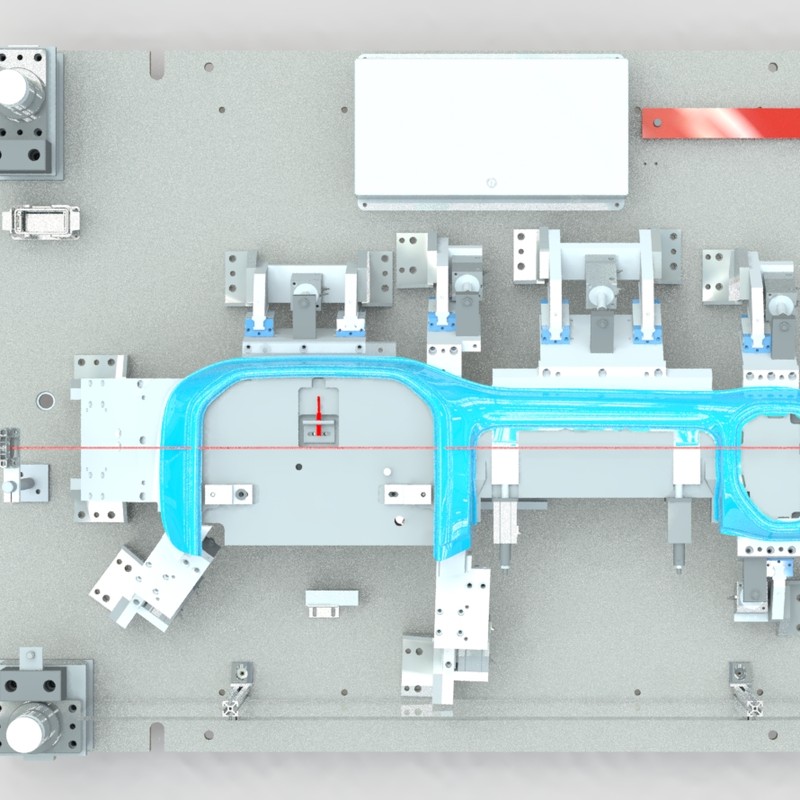
What Edge Folding Does
A covered trim panel starts with a rigid substrate and a decorative skin laid over it. The skin is cut larger than the panel, so a strip hangs past the edge.
Folding that strip around to the back hides the raw cut and locks the skin in place. Without it, the edge would show and could lift over time.
Where Folded Edges Show Up
Door panels, dashboards, seating components and headliners all use folded edges. These are the parts drivers and passengers touch and see every day.
Trim quality shapes how a cabin feels, a point we cover in automotive trim and vehicle comfort. The folded edge is one of the details people notice first.
How the Fold Is Made
The panel sits on a fixture with its edge exposed and the covering hanging over it. A folding tool then pushes the covering over the edge and down onto the back face.
One describes a folder that moves horizontally over the edge, then downward, driven by pneumatic or servo actuators. A backup blade holds the panel's face steady while the tool moves.
Adhesive, Heat or Both
Most folds are held with adhesive applied to the overhanging strip of covering. Some setups use heat instead, or heat to activate the adhesive.
The same patent describes infrared or hot-air heaters that warm the edge before the fold, with output adjusted for each material. Vinyl, leather and cloth each respond to heat differently.
Why Manual Wrapping Falls Short
Folding edges by hand is slow and hard to repeat. A cites labor costs, long cycle times and possible hand injuries from bending edges over and over.
Automated tooling takes that repetitive motion off the operator. It also removes the variation that comes from different hands on different shifts.
Getting Clean Edges Without Bumps
Poor control of the moving material can leave bumps or wrinkles along a fold, and those parts get scrapped. Controlled tool paths and steady fixturing keep the covering tight as it wraps.
That kind of repeatability is the same reason automation improves consistency across automotive assembly. It also supports the finish quality behind premium interior trim.
Tooling Built Around the Part
No two trim panels share the same shape, material and edge profile. Edge folding tooling is designed around soft materials, complex curves and the specific part it will run.
We also build the special purpose machines that often sit beside folding stations on a trim line.
Frequently Asked Questions
What materials can be edge folded on interior trim?
Vinyl, leather and fabric are the most common coverings folded around interior trim panels. Each one stretches and grips differently, so the tooling, heat and pressure are set to suit the material on that part.
Hill Machinery builds edge folding tooling for fabric, vinyl and leather on parts such as door panels, dashboards and seating components.
Is edge folding done with glue or with heat?
Either one, and sometimes both. Many lines apply adhesive to the overhanging strip of covering before the fold, while others use heat to bond the material or to activate the adhesive.
One published edge folding patent describes infrared or hot-air heaters whose output can be adjusted for different covering materials, so the right method depends on the part.
Can edge folding tooling fit an existing production line?
Yes, in most cases. Hill Machinery customizes its interior automotive edge folding tooling to match the parts, materials and layout already on a production line, so it works with the equipment you run today.
Sharing part drawings, cycle time targets and floor space early helps the tooling fit without major changes to the line around it.
Why do folded edges sometimes wrinkle or bump?
Wrinkles and bumps usually come from poor control of the covering as it moves over the edge. If the material slips, bunches or is heated unevenly, the fold will not lie flat.
A published patent on folding trim edges ties these defects to scrapped parts. Steady fixturing, controlled tool paths and even heat are the usual fixes.
Can edge folding handle curved trim parts?
Yes. Curved and contoured edges are common on door panels and dashboards, and the folding tool has to follow that shape without stretching or creasing the covering.
Hill Machinery designs its edge folding tooling for soft materials, complex curves and intricate design details, so the tooling is shaped to the specific part rather than adapted from a generic fixture.