

While manual assembly has long played a role in automotive production, automated assembly has emerged as the superior solution for manufacturers focused on long-term efficiency, safety, and growth. Working with our US automation equipment manufacturer allows automotive companies to implement systems designed to meet today’s demands and tomorrow’s challenges.
The Limitations of Manual Assembly
Manual assembly relies heavily on human labor to perform repetitive, physically demanding, and precision-based tasks. While this approach may offer flexibility for low-volume or highly customized work, it introduces several risks as production scales.
Human fatigue, inconsistent execution, and ergonomic strain can lead to errors, injuries, and downtime. In an industry where precision and repeatability are critical, these variables can compromise quality and increase costs.
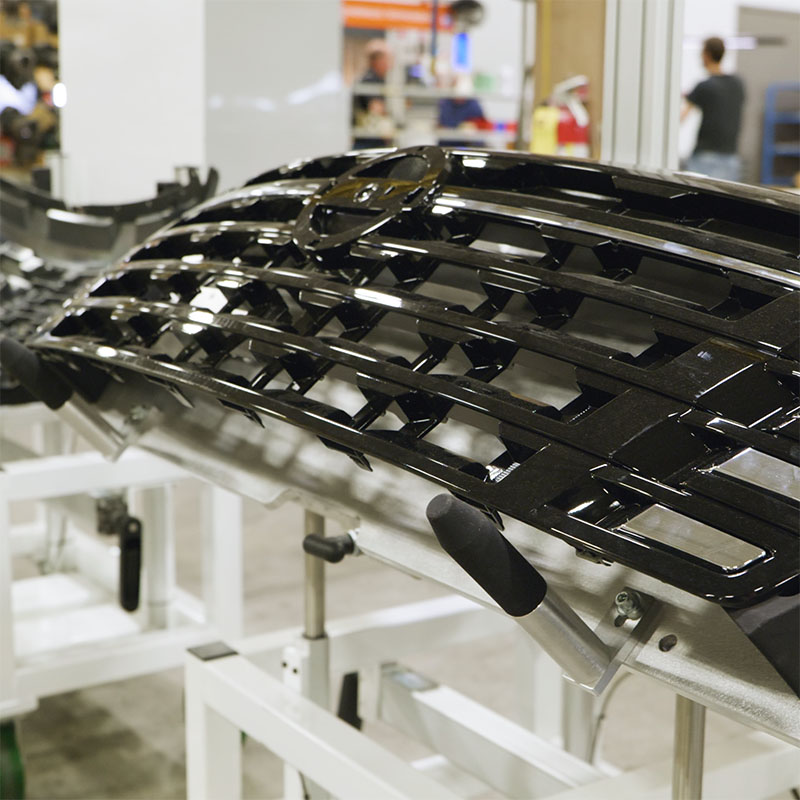
Additionally, labor shortages and rising workforce costs make it increasingly difficult to rely on manual assembly as a long-term strategy. Training, turnover, and scheduling challenges further impact productivity and limit a manufacturer’s ability to respond quickly to market demand.
Why Automated Assembly Delivers a Competitive Advantage
Automated assembly systems are designed to perform tasks with consistent accuracy, speed, and reliability. Robotics, conveyors, automated fastening, and vision systems remove variability from the production process, ensuring each component is assembled to exact specifications. This level of consistency is essential for meeting automotive safety standards and maintaining brand reputation.
Automation also significantly improves throughput. Systems can operate continuously, maintain steady cycle times, and scale output without the need to proportionally increase labor. For manufacturers competing on speed-to-market and cost efficiency, automated assembly provides a clear advantage.
Improved Safety Through Automation
One of the most compelling reasons to shift toward automated assembly is worker safety. Automotive assembly often involves heavy components, repetitive motion, and precision tasks that can strain the body over time. Automated systems take on these high-risk activities, reducing the likelihood of workplace injuries and creating a safer environment for employees.
By minimizing direct human involvement in hazardous or repetitive tasks, manufacturers not only protect their workforce but also reduce costs associated with injuries, downtime, and regulatory compliance.
Consistent Quality and Built-In Inspection
Automated assembly lines excel at maintaining quality across every unit produced. Integrated inspection systems can detect issues in real time, preventing defects from moving downstream and reducing costly rework. Unlike manual inspection, automated quality checks operate with the same accuracy on every cycle, ensuring consistent results regardless of shift or volume.
This level of quality control is increasingly important as automotive designs become more complex and tolerances tighter.
Flexibility for the Future
is not rigid or inflexible. Today’s systems can be modular and reconfigurable, allowing manufacturers to adapt to new models, platforms, or production volumes. Automation supports long-term scalability, enabling companies to grow without sacrificing efficiency or safety.