

Whether you’re running a lean manufacturing line or a high-volume assembly operation, the right workstation setup can reduce fatigue, improve consistency, and help your team work smarter—not harder. Below are five key reasons manufacturers are investing in ergonomic assembly tables, and how our US automated machine manufacturer can help you build a safer, more efficient workspace.
1. Reduced Worker Fatigue and Strain
One of the biggest benefits of ergonomic assembly tables is how much they reduce physical stress on employees. Traditional fixed-height workbenches often force workers to bend, reach, or hunch over for hours at a time. Over time, that leads to muscle fatigue, soreness, and repetitive strain injuries.
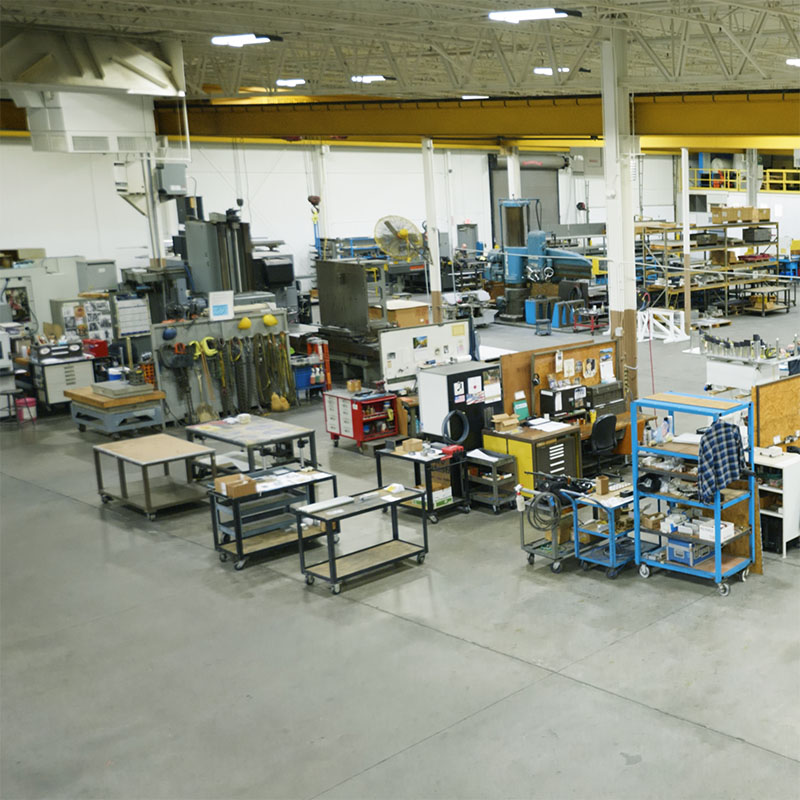
, especially those with adjustable height, allow employees to work in a more natural posture. When the table is set at the right height, workers can keep their shoulders relaxed, elbows at a comfortable angle, and backs straighter. This reduces strain and helps employees stay focused and energized throughout the day.
2. Increased Productivity on the Line
Comfort directly affects output. When employees aren’t constantly adjusting their posture or dealing with discomfort, they can move faster and work more consistently. Ergonomic assembly tables support better workflow by keeping parts, tools, and components within easy reach.
Many modern tables also include features like:
- Integrated shelving and bins
- Tool rails and mounts
- Conveyor integration
- Adjustable fixtures or jigs
These improvements reduce wasted motion and speed up assembly time, especially in repetitive processes.
3. Better Quality and Fewer Mistakes
Assembly quality is often tied to visibility, stability, and worker control. If a worker is struggling to see the workpiece clearly or is uncomfortable during detailed tasks, mistakes are more likely to happen.
Ergonomic assembly tables can be designed with:
- Improved lighting placement
- Tilt features for better viewing angles
- Stable surfaces that reduce vibration
- Fixtures that hold parts securely
When employees can work in a comfortable position with proper support, they’re more likely to maintain precision and produce consistent results.
4. Improved Safety and Reduced Injury Risk
Workplace injuries don’t just affect employees. They affect uptime, training costs, and production schedules. help reduce risk by minimizing awkward movements, overreaching, and poor lifting habits.
In addition, ergonomic workstations can be paired with automation solutions such as lift assists, pneumatic clamps, or part-positioning systems. This is especially valuable for heavy components or repetitive tasks that involve frequent handling.
For many manufacturers, ergonomic upgrades are part of a broader safety strategy that supports compliance, reduces workers’ comp claims, and protects long-term workforce health.
5. More Flexibility for Different Workers and Products
Manufacturing teams are rarely one-size-fits-all. Different employees have different heights, strength levels, and working preferences. On top of that, production needs change over time.
Ergonomic assembly tables, especially modular and adjustable models, offer flexibility that fixed workbenches simply can’t. Height-adjustable workstations allow multiple employees to use the same station comfortably across shifts. Modular layouts also make it easier to adapt when product lines change or new processes are introduced.
Build a Smarter Workstation Setup
Ergonomic workstations are a practical investment that pays off in comfort, quality, and productivity. When designed correctly, they can transform a workstation from a daily struggle into a streamlined, repeatable process.